Blog

Rethinking Rights: From Entitlement to Relationship

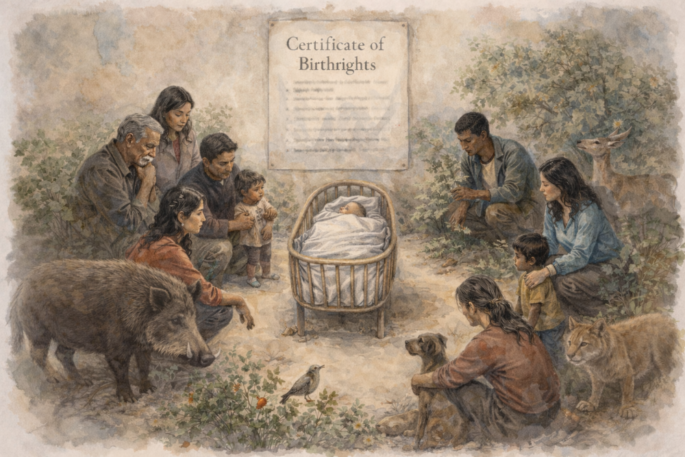
There is a word that frequently makes me stumble when I hear or read it. Even though it is being used in different contexts, there always seems to be an underlying sense of urgency, importance, and certainty. It is the word birthright. I have come across humans’ ‘birthrights’ to: freedom, a liveable environment, protection from harm, work, healthcare, joy, fulfilling your purpose, and quite a few more.

As beautiful and empowering as this concept might sound, there are some concerns that it brings up within me. Often, ‘birthright’ quietly smuggles in the assumption that existence comes with guaranteed entitlements; that being born is like receiving a voucher, a claim, or a title deed; and that the world somehow owes the individual something simply for arriving.

While this framing might make sense through the perspective of modernity – where life is organized around ownership, contracts, individual sovereignty, and accumulation – from a wider-angle lens, it is oddly specific and historically recent. In many non-modern ontologies, being born is not a claim but an arrival into obligations: to land, to ancestors, to those not yet born, to non-human kin, and to the continuity of life itself.

Continue reading “Rethinking Rights: From Entitlement to Relationship”

Letting Go of the Future: On Time, Modernity, and the Costs of Living Elsewhere

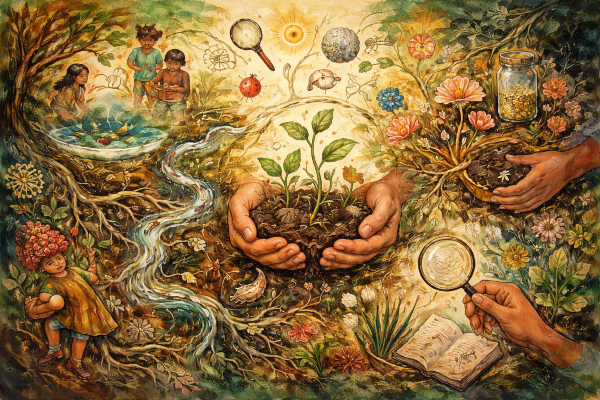
For most of human existence, the future was not a destination. It was more like the weather — something that arrived, departed, returned, surprised, and could not be owned. The modern fixation on “the future” as a project, a promise, or a debt is a recent invention, tightly braided with modernity’s desire for control and prediction.1

To make the future into a destination, time first had to be straightened. Earlier ways of living held time not as a straight line stretching forward, but as a living field of return. Seasons circled back. Stories folded past and future into the present. Decisions were made in conversation with what had come before and with what might echo beyond one’s lifetime. Time was relational and recursive, shaped by land, ceremony, memory, and repetition.

Modernity quietly reorganised this experience. It stretched time into a line, pointed it forward, and named this movement “progress.” In doing so, time became something to be managed, optimised, and extracted from — broken into units, deadlines, growth curves, and futures to be secured. What was once a shared rhythm became a resource, and what was once simply lived became something to get ahead of.

Continue reading “Letting Go of the Future: On Time, Modernity, and the Costs of Living Elsewhere”

Beyond Self-Directed Education: Composting the Myth of the Independent Learner

In family homes, democratic schools, and alternative learning groups, something beautiful is unfolding. Families are stepping away from standardized schooling and letting curiosity lead. But even as we celebrate self-directed learning, it’s worth pausing to ask:

What kind of “self” is directing — and being directed?

Self-directed education invites the learner to steer their own learning, guided by curiosity rather than by external authority. Yet the self that takes the wheel has already been shaped, often unconsciously, by modernity — a system that rewards productivity, control, and comfort, while punishing rest, uncertainty, and discomfort. So even when no one else is giving orders, our children’s bodies may still follow the old commands woven into our very air — commands we can’t fully hide from, no matter how alternative or liberating our choices may feel.

When we begin to notice this, what we call self-direction reveals itself as a more layered practice. It is no longer only about individual freedom, but about decolonizing the internal authority that modernity has wired into our neurobiology. The goal is not to erase the self, but to expand it — so that the learner is directed not only by curiosity, the craving for achievement, or the desire for fun and comfort, but also by relationship: with the land, the community, and the web of life that makes learning possible at all.

Continue reading “Beyond Self-Directed Education: Composting the Myth of the Independent Learner”

Adultism as a Cultural Blind Spot: How Young People Learn to Hold Themselves Back

What is adultism?

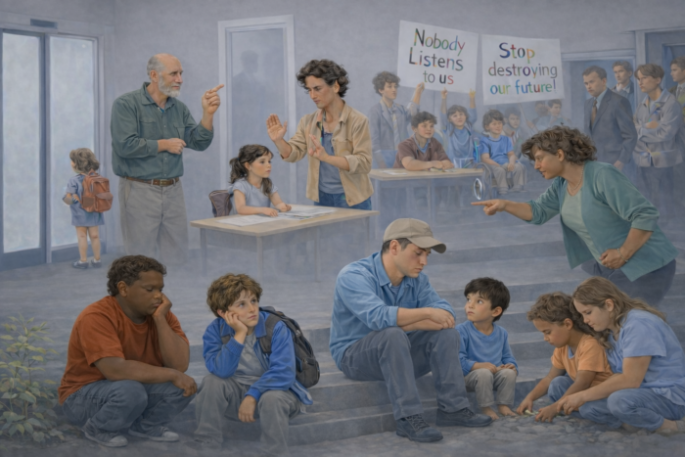
Adultism is discrimination against young people because of their age. It is probably the most widespread form of discrimination worldwide, and it is based on the assumption that children and adolescents have less to say, that they are less intelligent, or less valuable. If you take a closer look, you can see that this assumption is deeply embedded in society and affects many areas of life.

In urban planning, children are often barely taken into account – for example when streets are designed primarily for cars rather than for children’s safe and independent mobility. Sometimes this also shows up in very simple things, such as supermarket doors that do not open if you are below a certain height, or in other everyday practicalities in which children are not considered (and which go beyond a purely protective function). This naturally restricts young people’s independence, as there are many things they cannot do unless an adult accompanies them. It also limits their opportunities for learning.

At the political level, children and young people are often talked about, but almost never talked with. Due to existing voting rights and political structures, their voices are largely ignored. Their opinions carry little weight, and when they attempt to make themselves heard through other means – such as the Fridays for Future movement – they are often dismissed as immature, unrealistic, or motivated purely by selfish interests (for example, the familiar accusation of “skipping school”).

Continue reading “Adultism as a Cultural Blind Spot: How Young People Learn to Hold Themselves Back”

Eine Reise zu mir selbst

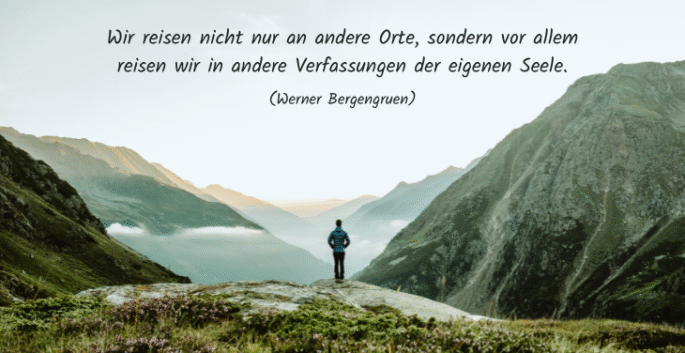
Mit 19 bin ich auf eine große Reise gegangen: 4 Monate Mittelamerika – 6 Wochen davon mit zwei Freundinnen, der Rest alleine. Geplant war zuerst ein Besuch bei einem ehemaligen Gastschüler meiner 11. Klasse und seiner Familie in Guatemala Stadt. Dann 2 oder 3 Wochen Sprachschule in Quetzaltenango und danach weiterreisen nach El Salvador, wo wir im Jahr davor bereits 3 Wochen als Teil einer kleinen Jugenddelegation der evangelischen Kirche verbracht hatten. Am Ende bin ich dann tatsächlich bis nach Panama und wieder zurück nach Guatemala gereist. Denn bereits in Quetzaltenango sind wir eingetaucht in die Welt der Backpacker, von der ich bis dahin noch nicht mal wusste, dass sie existiert.

Es waren hauptsächlich junge Menschen aus den verschiedensten Ländern, die für einige Zeit (von wenigen Wochen bis zu mehreren Jahren) nomadisch lebten, ihren momentanen Besitz auf dem Rücken trugen und sich größtenteils relativ planlos von einem Ort zum anderen treiben ließen. Für mich war das eine unglaublich spannende und faszinierende Welt! Und nachdem meine Freundinnen zurück nach Deutschland gereist waren, und ich bei der Pfarrersfamilie in El Salvador geblieben war, packte mich eine starke Sehnsucht, weiterhin Teil zu sein von dieser Bewegung, die scheinbar unbegrenzt und voller toller Begegnungen und Abenteuer war. Zum ersten Mal in meinem Leben hatte ich vollkommene Selbstbestimmung erlebt – ein Gefühl unbegrenzter Freiheit und Möglichkeiten. Und davon wollte ich noch mehr, also zog ich ungeplant alleine weiter.

Continue reading “Eine Reise zu mir selbst”

Where is the Natural Regime?

Today, during one of our ConsciousU  community calls, we did a short envisioning meditation about life in the normal regime, the natural regime1, and a bridge between them, followed by individual sharing and a group conversation. It was a good exercise and a rich exchange which left me with a couple of thoughts and questions that I’m now trying to sort by writing this text.

During the meditation, I saw in my mind the normal regime on the one side and the natural regime on the other side. The normal regime was pretty gray, busy, stressed, and not very much fun. There seemed to be no time and space for pausing and there seemed to be no end to the tasks that needed to get done, always focusing on the next thing to do. The natural regime, in contrast, was much more colorful and slower, with deep breathing, time to be present, and space to truly take in everything around. There was a feeling of peace, joy, and aliveness, as well as a deep sense of gratitude.
Personally, I feel like I’m in the natural regime most of the time. So, when I envisioned the bridge between the two regimes, it almost felt like a threat – an opening that would allow the busyness, stress, and sadness of the normal regime to come into the natural regime.

After hearing from other community members and reflecting on my own thoughts and feelings a bit longer, I started to realize that dividing the world into the normal regime on one side and the natural regime on the other is actually not very helpful. It might just create more separation – and also more tasks and stress – if the goal is to ‘get to the other side’.

Continue reading “Where is the Natural Regime?”

„Ich habe mit Geld meinen Frieden geschlossen“

Als ich diesen Satz im September letzten Jahres aufschrieb, hat er sich noch wie eine große Lüge angefühlt. Und genau das war auch die Aufgabe gewesen. Denn laut Peter Koenig, dem Entwickler der Geldarbeit, beginnt jede Veränderung mit einer Lüge. Nichts verändert sich, solange wir an unseren alten Wahrheiten festhalten.

Aufgrund einer persönlichen Empfehlung und nachdem ich mir die Aufzeichnung eines Schnupper-Workshops angeschaut hatte, hatte ich mich zum 11-wöchigen Kurs CU*money angemeldet. Und nun ging sie also los – die Reise dahin, „Geld-bewusst“ zu werden. Gemeinsam mit ca. 30 anderen Menschen, und im intensiven Kontakt mit meiner mir zugeteilten Kleingruppen-Partnerin, durfte ich in den nächsten Wochen die Höhen und vor allem Tiefen meiner Glaubenssätze und die sich daraus ergebende Beziehung zu und den Umgang mit Geld genauestens erforschen.

Continue reading “„Ich habe mit Geld meinen Frieden geschlossen“”

Mehrdeutiger Erfolg

Manche Begriffe sind den meisten von uns ziemlich vertraut. Wir verwenden sie häufig, ohne allzu viel über ihre Bedeutung nachzudenken. Sie erscheinen in Büchern und Zeitungsartikeln, werden in Vorträgen und Gesprächen erwähnt und tauchen auch in unseren Gedanken auf. Weil sie so allgegenwärtig sind, wird davon ausgegangen, dass diese Begriffe fixe Konstanten sind und alle wissen, um was es geht. Doch könnte es sein, dass diese Annahme ein Trugschluss ist?

Vielleicht beginnt es damit, scheinbar etablierte Begriffe neu zu betrachten: Wie lautet meine eigene Definition von einem Begriff? Wie spreche ich mit anderen darüber? Und merken wir überhaupt, ob wir dasselbe meinen?

In diesem Beitrag möchte ich einen solchen Begriff genauer betrachten – und zwar geht es um Erfolg.

Wenn ich das Wort Erfolg höre, dann wird mir bewusst, wie eng seine Bedeutung oft gefasst ist. Es geht meist um volle Bankkonten, gewinnbringende Aktien oder eindrucksvolle Karriereschritte. Man hat es geschafft – und ich frage mich was dieses es eigentlich sein soll.

Continue reading “Mehrdeutiger Erfolg”

Kann Demokratie erlernt werden? – Was Fehlerkultur und Experimentieren mit Demokratiekompetenz zu tun haben

Nadjeschda Taranczewski von ConsciousU hat mich für ihren Newsletter im Februar zum Thema Adultismus, Selbstwirksamkeit und Demokratie interviewt.

Dies ist ein Auszug aus unserem Gespräch. Das Video des gesamten Interviews (30 Minuten) ist unter folgendem Link zu finden: https://vimeo.com/909464723


Was ist Adultismus und wie wirkt sich dieser in der Gesellschaft aus?

Adultismus ist die Diskriminierung von jungen Menschen aufgrund ihres Alters. Es ist wahrscheinlich die verbreitetste Diskriminierungsform weltweit. Dahinter steckt die Annahme, dass Kinder und Jugendliche weniger zu sagen haben, dass sie weniger intelligent oder weniger wertvoll sind. Wenn man genauer hinguckt, dann sieht man, dass das gesellschaftlich eine weit verbreitete Annahme ist, die sich in verschiedenen Bereichen widerspiegelt.

Continue reading “Kann Demokratie erlernt werden? – Was Fehlerkultur und Experimentieren mit Demokratiekompetenz zu tun haben”

Spielen, Neurobiologie und Kreativität

“Immer dann, wenn wir zu spielen beginnen, öffnet sich uns eine Welt, in der all das verschwindet, was uns im alltäglichen Zusammenleben daran hindert, die in uns angelegten Potenziale zu entdecken und zu entfalten. Wenn wir wirklich spielen, erleben wir auch keinen Druck und keinen Zwang mehr, und wenn es nichts mehr gibt, was uns bedrängt, verschwindet auch die Angst. Deshalb fühlen wir uns immer dann, wenn wir spielen, lustvoll und frei.”

Spielen verstärkt unsere Lebensfreude!

Im Spiel verlieren wir unsere Angst!

Im Umkehrschluss lässt sich auch feststellen, dass Kinder sofort aufhören zu spielen, wenn sie unter Druck geraten (beispielsweise wenn sie spüren, dass sie beobachtet werden), wenn es ihnen nicht gut geht (weil sie krank sind oder ein Problem sie belastet) und wenn sie sich verunsichert fühlen oder Angst haben.

Continue reading “Spielen, Neurobiologie und Kreativität”